
Peake Brook Veterinary Center
Pet Loss & Bereavement Support
Losing a pet means losing a member of the family. Whether you are facing a difficult decision, missing a companion who has passed, or caring for the pets still at home, we have gathered resources to help you through each step.

Pet Loss & Grief Resources
Pet Quality of Life
Scale & Daily Diary
Score your pet each day on seven areas: appetite, drinking, mobility, comfort, hygiene, interaction with family, and interest in favorite things. Adding up the scores over time shows whether your pet is holding steady or needs more help.
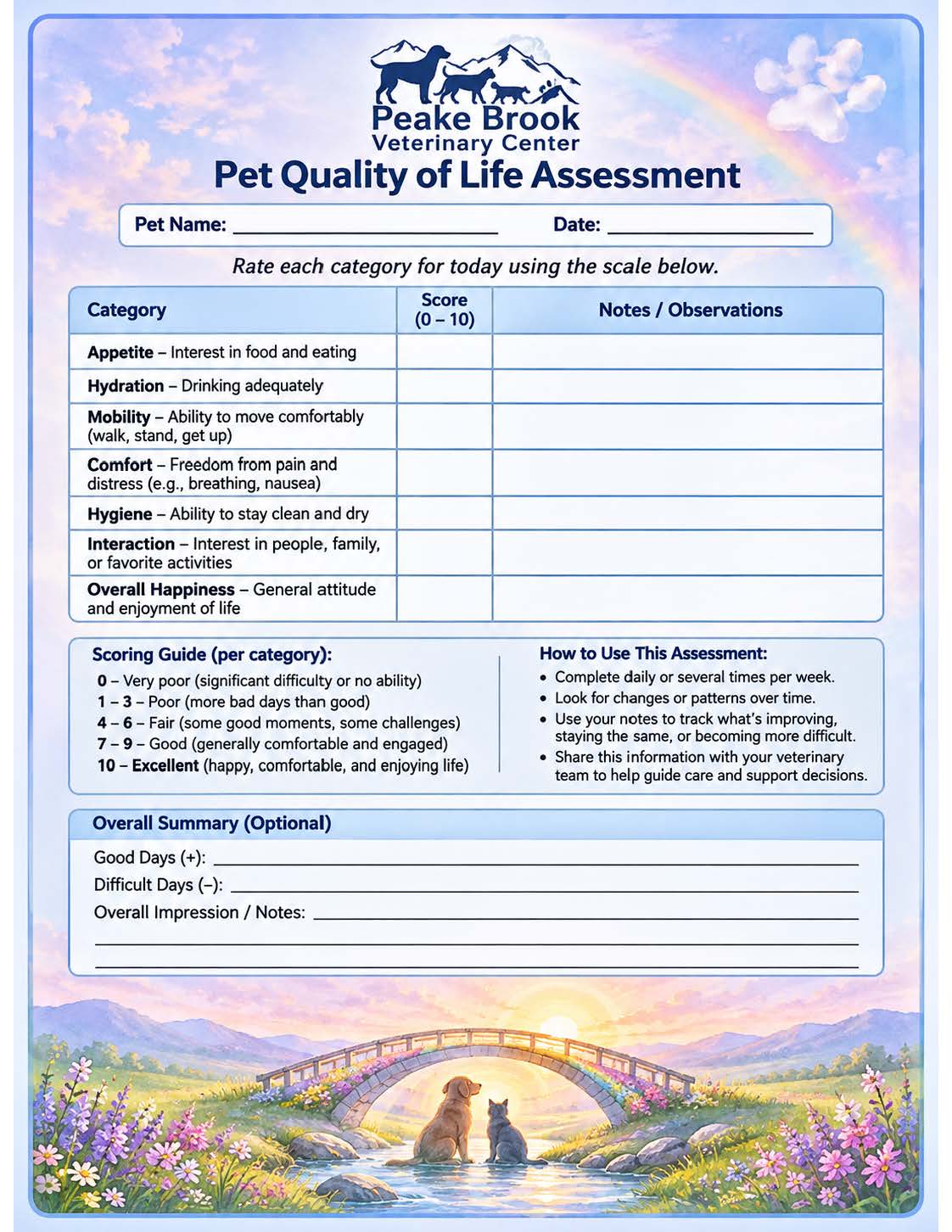
Quality of Life
Calendar
A simpler way to see the bigger picture. Mark each day as a good day or a bad day, then tally the month. When bad days begin to outnumber good ones, it may be time for a conversation with your veterinarian.

Pet Bereavement
Support Group
Whether your loss is recent or years ago, you don’t have to carry it alone. Join others who understand in a safe, supportive space to share your story, listen, and find comfort.

When to call us: If your pet’s appetite, energy, or behavior keeps declining, please schedule a visit so we can rule out a medical cause.
Cats who stop eating for a day or two need prompt attention, as this can quickly become serious.
Call 860-315-5955.
Coping With Your Loss
What you may feel
Sadness, guilt, anger, numbness, loneliness, and even relief are all common. Feelings often come in waves rather than in a neat order.
How grief shows up in the body
Trouble sleeping, changes in appetite, fatigue, headaches, an upset stomach, and difficulty focusing are all normal responses to loss.
How long it lasts
There is no set timeline. The most intense feelings often ease after the first couple of months, while quieter sadness can linger much longer.
Gentle ways to care for yourself
Give yourself permission
Let your feelings come without judging them. Look through photos, spend time outdoors, or simply rest.
Keep a routine
Eating well, sleeping, and small daily tasks offer steadiness, even when they feel hard.
Talk about it
Share memories with people who understand, or connect with a pet loss support group.
Honor their memory
A small ritual or keepsake can help you carry their love forward. See ideas below.
You don't have to go through this alone
Our team at Peakebrook Veterinary Clinic understands how hard this time is. If you need someone to talk to, have questions, or would like help finding grief support, please contact us directly. We’re here for you.
Helpful Pet Loss Grief Videos
Why Pet Loss is a Heavy Grief
Pet Loss Grief; The Pain Explained
How to Cope with Losing a Pet
Death of a Pet: First with Kids
These videos are shared as helpful resources. Peake Brook Veterinary Center does not create or endorse their content, and their inclusion does not imply that the video creators endorse or are affiliated with Peake Brook Veterinary Center.
Videos are not a substitute for veterinary advice.
Helping Your Other Pets Grieve
Dogs and cats may not understand death the way we do, but many clearly notice when a companion is gone. Changes in routine and the missing presence of a friend can affect them, too.
Signs a pet may be grieving
- Seeking more attention, or becoming clingy
- Waiting in their companion’s favorite spot
- Eating less or more slowly
- Sleeping more than usual
- Vocalizing more often or more loudly
- Seeking late companion’s resting place
How you can help
- Keep meals, walks, and playtime on their usual schedule
- Offer extra affection and attention
- Try new toys, puzzle feeders, or a new perch
- Be patient with accidents or restlessness
- Never punish
Common Questions
Use the quality of life scale or calendar above to track how your pet is doing, and talk with our veterinarians. We will help you understand your pet’s condition and options, without pressure.
Yes. For many people, losing a pet hurts as much as losing a close friend or family member. Your grief reflects the bond you shared.
Guilt is one of the most common feelings after saying goodbye. Try to meet yourself with the same kindness your pet showed you. Choosing a peaceful passing to spare your pet suffering is an act of love.
Some experts believe letting other pets see or smell their companion afterward helps them understand the loss. Some will linger and others will simply walk away. Either response is normal. Ask our team if you’d like to talk it through.
There’s no right answer. Give yourself and your other pets time to adjust first. When you feel ready, welcoming a new pet doesn’t replace the one you lost. It can be another way to honor them.
Use the pet’s name, share a happy memory if you have one, and simply listen. Avoid looking for a silver lining. Sitting with someone in their sadness is often the most helpful thing.
We're Here For you
Our team has walked alongside many families through this.
If you have questions, need to talk, or would like help finding local support, please reach out.
If grief feels overwhelming, or you or someone you know is having thoughts of self-harm, call or text the Suicide & Crisis Lifeline at 988, or visit 988lifeline.org.
In an emergency, call 911.